
April: Coming Back to Life, Gently. Therapy for women in Minnesota
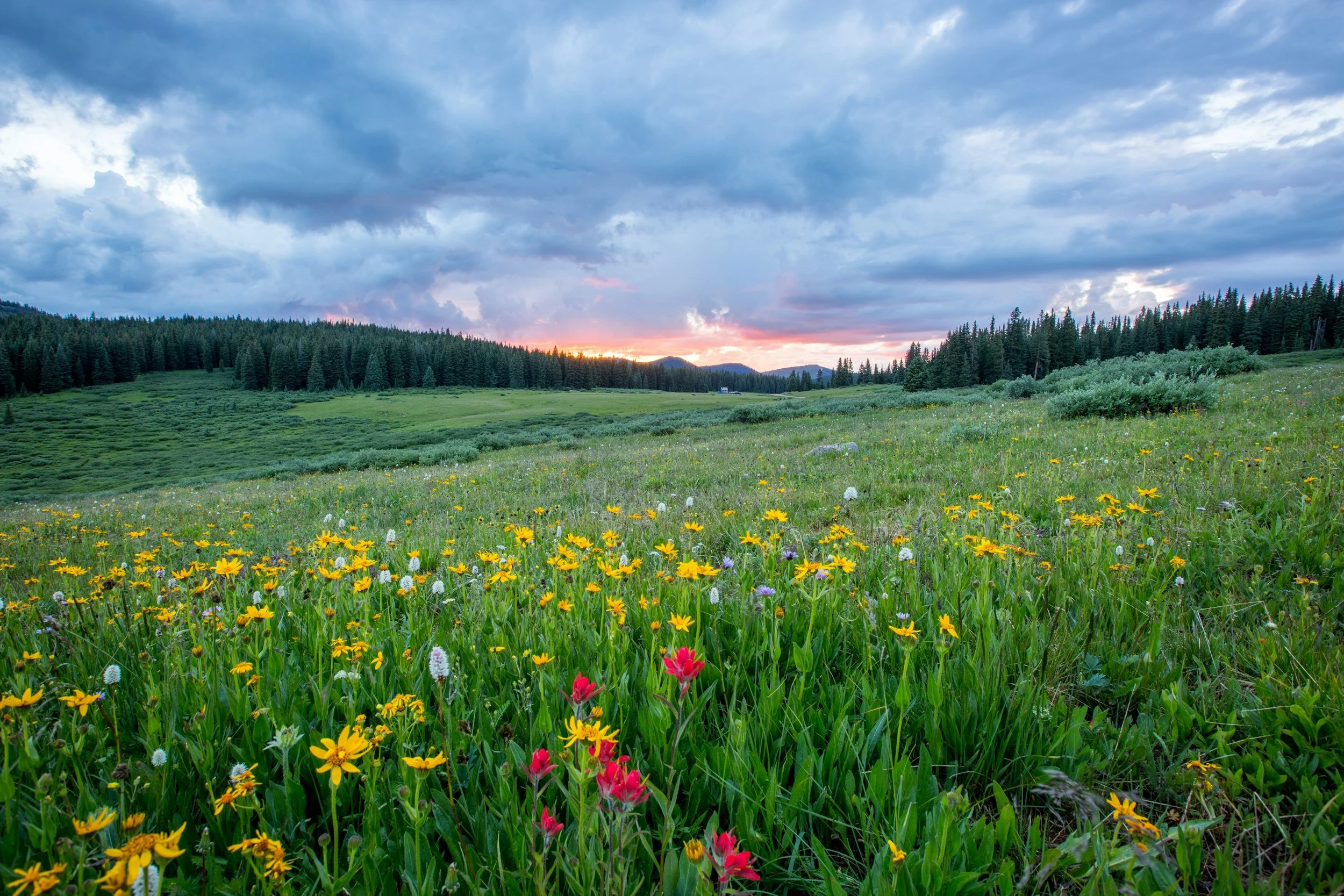
Spring nervous system regulation
There is a quiet shift that happens this time of year.
The snow begins to soften.
The ground slowly thaws.
The air feels different, even if winter still lingers in the mornings.
Spring does not arrive all at once.
It unfolds.
And the body moves in a similar way.
After months of winter, of slowing down, of holding more stillness, there can be a natural pull toward movement, energy, and doing more. But just like the earth, we are not meant to rush this transition.
We are meant to ease into it.
The Nervous System and Seasonal Change
Seasonal transitions impact the nervous system more than we often realize.
As daylight increases and temperatures shift, the body begins to adjust its internal rhythms. Research shows that light exposure plays a role in regulating circadian rhythms and mood, influencing sleep, energy, and emotional regulation.
This means that feeling a mix of emotions in the spring is not only normal, it is expected.
You might notice:
More energy some days and exhaustion on others
A desire for change paired with uncertainty
Emotional waves that feel unexpected
This is not something to fix.
This is something to notice.
Source: National Institute of General Medical Sciences. “Circadian Rhythms.” Updated 2022.
https://www.nigms.nih.gov/education/fact-sheets/Pages/circadian-rhythms.aspx
You Do Not Always Have to Be Working on Healing
There can be a quiet pressure in personal growth spaces that says you always need to be working on something.
Healing.
Processing.
Improving.
Becoming.
But the truth is:
You are allowed to rest inside your life.
You are allowed to experience joy without questioning it.
You are allowed to feel sadness without trying to resolve it.
You are allowed to have moments where you are simply living.
Emotions are not problems to solve. They are experiences to move through.
Research in affective science shows that emotions are temporary physiological states that naturally rise and fall when they are not suppressed or avoided.
When we allow ourselves to feel without resistance, the body often completes what it needs to.
Not by force.
But through experience.
Source: Keltner D, Gross JJ. “Functional Accounts of Emotions.” Cognition and Emotion. 1999.
https://doi.org/10.1080/026999399379140
Coming Back Into the Body
Spring is an invitation back into embodiment.
Not in a forceful way.
Not in a structured way.
But in a noticing way.
Embodiment is not about doing more with the body.
It is about being with the body.
You might begin with something simple:

how to regulate your nervous system in spring
A Gentle Spring Orienting Practice
Step outside or sit near a window.
Slowly look around and name:
5 things you can see
4 things you can hear
3 things you can feel in your body
Let your eyes move naturally.
Let your breath be as it is.
This type of orienting practice supports the nervous system by helping the brain recognize safety in the present environment.
Source: Porges SW. “The Polyvagal Theory.” Norton. 2011.
There is nothing to achieve here.
Just noticing.

Living in the Present Moment
So much of daily life pulls attention into the past or the future.
Spring invites something different.
The feeling of the sun on your face.
The sound of melting snow.
The smell of the earth waking up.
Presence is not something we force.
It is something that emerges when the body feels safe enough to be here.
You do not have to hold onto the moment.
You only have to notice that you are in it.
Seasonal Nature Therapy Beginning Mid-April
As the earth begins to open, so does the opportunity to step outside of traditional spaces.
Beginning mid-April, I will be offering Seasonal Nature-Based Therapy.
These sessions are held outdoors, allowing space for:
Gentle walking or stillness
Pauses for breath and awareness
Time to notice both the environment and your internal experience
Nature-based therapy has been associated with reduced stress and improved mood through exposure to natural environments.
This is not about doing therapy differently.
It is about allowing space for the body to experience something different.
Source: Twohig-Bennett C, Jones A. “The health benefits of the great outdoors.” Environmental Research. 2018.
https://doi.org/10.1016/j.envres.2018.06.030

Yoga at the Cultural Center
Movement can also be a way of reconnecting with the body in a supportive and accessible way.
At the New York Mills Regional Cultural Center, I continue to offer:
Wednesday Body-Led Yoga Flow
A gentle evening practice to unwind and reconnect
Friday Body-Led Yoga Flow
A steady, grounding start to the day
These classes are:
Slow and intentional
Accessible for all bodies
Focused on breath, awareness, and choice
You do not need experience.
You only need to show up as you are.
Private-Pay Somatic Therapy
I also offer private-pay somatic therapy through Northwoods Velvaere Studio.
This work is centered on:
Nervous system regulation
Body awareness
Emotional processing at your own pace
Therapy is not only for when things feel overwhelming.
Just like we care for our physical health, we can also care for our emotional and nervous system health even when things feel “okay.”
You do not need to be in crisis to begin.

Living in Rhythm With the Earth
Spring does not rush.
It does not force growth.
It does not skip steps.
It allows for:
Slow emergence
Unpredictable weather
Periods of stillness alongside change
You are allowed the same.
You are allowed to:
Move forward slowly
Rest when needed
Feel what arises
Be in the process, not ahead of it
There is nothing behind you.
There is nothing you need to catch up to.
There is only what is here.
A Gentle Invitation
If you are feeling the shift this season, you are not alone.
If you are feeling both the pull forward and the need to stay slow, that is part of the rhythm.
If you are wanting support as you move through this season, I am here.
You can:
Explore private-pay somatic therapy
Join a yoga class at the Cultural Center
Step into seasonal nature-based sessions beginning mid-April
Or simply begin by stepping outside, taking a breath, and noticing where you are.
That is enough.

With care,
Bobbi Jo Hamilton, MSW, LICSW, RYT
